
|
Sai Vichaar 01.Feature of the Week 02.Contributed Article 03.Experiences of Devotees 04.Devotees Say 05.Sai Activities 06.Prayer Club 07.Quote of the Week 08.Question of the Week 09.Subscribe to Sai Vichaar 10.Email Newsletter to a friend 11.Submit Articles to Sai Vichaar 12.Un-Subscribe Sai Vichaar 13.From the Editor's Keyboard 14.Disclaimer From the Editor's Keyboard... Sai activities section is a good opportunity to spread the word about various activities, celebrations, and festivities of Sai centers across the world. Postings on Sai activities are very useful for new visitors and for those who would like to know more about Sai activities in theirs and other areas. Sai devotees in Singapore are requested to refer to Sai activities section. Sai Vichaar hopes and prays that the attempts to set up Shirdi Sai temple in Singapore be successful. The "Question of the week" for the week is, Q. What is "Unconditional love"? Humbly Yours, The Editor
Disclaimer Sai Vichaar is devoted to the philosophy and teachings of Shri Sadguru Sai Baba of Shirdi, and will take every measure to avoid topics or themes contradicting the same. Sai Vichaar team or saibaba.org is not responsible for the opinions expressed by individual contributors.
|
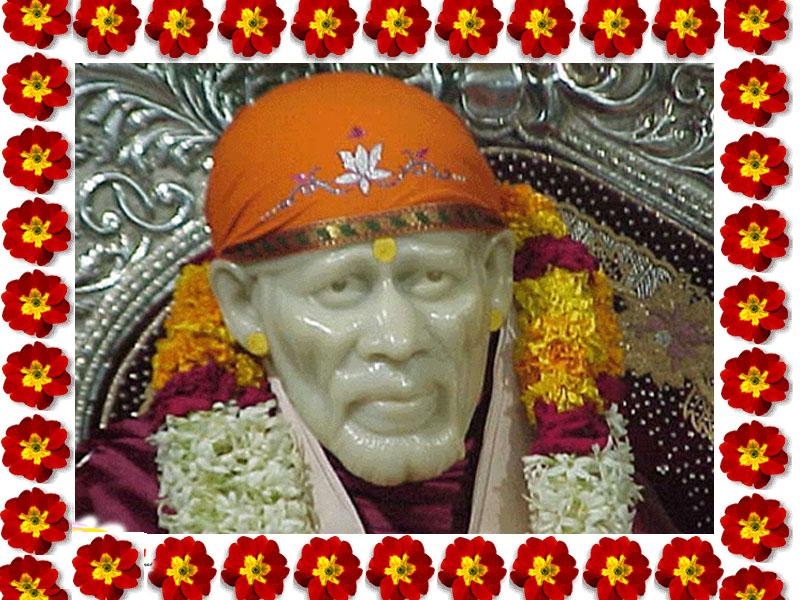 Feature of the week:
How do we relate to Baba?
Feature of the week:
How do we relate to Baba?
This is a question always lingering behind our minds - How to relate with BABA?
We go to Baba so that He might lighten our problems and burden. For me I approach Him as I approach my father. I know a father never refuses the whims and fancies of His child. I feel secure going to Him because I know I can play with him Him and twine Him round my little finger and tug the strings of His heart with my voice filled with love and faith in Him. To go to BABA one needs to have the Heart of a Toddler. Do we have one? When a child approaches father there is a sense of apprehension, uncertainty, but a child is never scared of father. Child trusts father more than his own life. Child knows that father would save it from any calamity. The feeling is that of Awe, apprehension but never scared. It is filled with love, trust and faith. Father never deliberately harms the child. Yes, He might refuse to give certain things because HE knows they are not good for the child. However, Father never condemns the child, condemns only the behavior. Do we have that trust towards Him filled with love and awe? As a child, one goes through phases in life, gets new friends, is fascinated with the world, and tries to explore it. But when the need arises and until the child is independent financially and physically, it always runs to father. Even in spiritual relationship with BABA, our father, we run to Him though we might feel we are wandering away from Him. Remember we are tied with strings to our feet and HE draws us near Him when HE reckons we are straying. Do not fear, fly but remember our strings are in His hands. Once we elevate spiritually then we merge with Father and we are one with Him. Do we feel comfortable straying away from Him? Do we feel guilty that we did not show physical or formal act of worship towards Him? Don't you know we always come back to Him even if we go away physically? The last three questions are based on each individual and their perception of their relationship towards Baba. Some show emotions while some don't. Whatever is the case - How steady are we in our faith? Do we show anxiety in spite of placing our burden on Him? Then perhaps our faith is superficial, we lack trust. What we say does not come from the depths of the heart. Have you ever tried throwing a tantrum at BABA? A relationship filled with deep emotion of love is healthy. Ever observed the feeling of warmth in a relationship that exists between a father and a child? A child who is confident that Father always loves it in spite of the tantrums and knows that it has the freedom of expression of its feelings and will still be loved in spite of shortcomings exhibits such feelings and grows to be a healthy individual brimming with self confidence. Let us try to show these feelings towards baba when the whole world has turned its back on us and we feel betrayed. We know we cannot express our feelings on fellow Humans, but why not take advantage of this old man who is waiting for an expression of love, any expression of love from us. I can feel being enveloped in His warmth and feel His breath on my hair as He hugs me towards His heart. I see this relationship between a child and a father. When I see my children interact play, throw tantrums and refuse to do what their father says. I see a new relationship of love and trust growing where each one tries to accommodate the other and forgive. Then after few minutes they run towards each other, hug, and play around and it is hard to see who is child and who is adult. Perhaps we need to forget that we are adults and behave like a child while interacting with BABA, and express our needs as a child does. We might need to engage in solitary play using our imagination and carry on internal conversations with BABA, and explore a new world of joy peace and happiness, which is always filled with love. Perhaps this would change our behavior, outlook and intensity of relationship we have with Him. Let us look for an unconditional expression of love and explore new avenues for establishing relationship with BABA. Life is too short; let us rejoice in His warmth. (Contributed by Anitha Kandukuri, Canberra, Australia)
Contributed Article: Sri Sai Gurucharitra - Chapter IV
My obeisance to Sri Ganesa! Most auspicious amongst the auspicious! Oh thou long bellied one! Oh thou embodiment of knowledge! Thou art foremost among gods! Oh gracious one! Hold my hand in yours and destroying all impediments and obstacles on the way, make me write this book. This 'Sant Kathamrit' is like the mango tree in the first flush of spring. The writings in this book are like the tender shoots of mango. The teachings contained herein are the delicious mango's which adorn the branches. Come eat them to your hearts content. If this book be the sacred lake Manas at the feet of Kailas, the abode of that five headed Siva; the contents are the pure water of that lake. The sacred lotus born in those pure waters is this 'Sant Kathamrit'. Sri Sai Baba's teachings flow from that lotus like the pure and delicious nectar. Come have your fill of the nectar.
In the 31st, 32nd and 33rd chapters of the 'Bhakta Leelamrit' I have told you about Sri Sai Baba. He is the kalpavriksha which grants all that his devotees seek. He is most munificent. He is a vast ocean of mercy. He is ever is vigilant in the care of his devotees and is a mountain of knowledge. He is the ark who conveys his devotees safely across the dangerous sea of worldliness. Once, a few devotees came for the darsan of that most able sadguru. It was the month of Pushya. They came on the day when the star Dhanush was in the transition phase. You may have a doubt as to why they had come on such a day. You know that it is the hoary tradition in the month of Dhanush to offer food to sun at dawn and then to eat it. In the same way, to prevent the cold of sorrow, the devotees have worn a warm inner cloth of devotion and came for the darsan of their sadguru. Shirdi is the abode of that sun of knowledge. The sun who rose there is Sri Sai Baba. That is why the devotees had assembled there. Baba's kind grace is the rosy dawn which promises a glorious day.
They had bathed in the Ganges of faith and diligent devotion to purify themselves before coming to the august presence of that jewel amongst sadgurus. The most able Baba had prepared a meal of right knowledge and had already placed the eating plates for his devotees. That is the month of Dhanush I was talking of. Many devotees had come to Baba at this holy time to partake fully of that meal of wisdom which he had so lovingly prepared for them.
Narayana Chandorkar, the son of Govinda was a pious man. He had taken birth in the family of Chandorkars. He was blessed by the grace of Sri Sai Baba and like Hari pant was meticulous in performing his religious duties. He conducted himself morally, following his dharma. Bere, Lakshman, Maruti and other devotees were also present there. How can I describe that magnificent scene? All were seated in the Masjid looking at Baba to their hearts content, as a child lovingly gazes at his mother when they meet, after she had been gone for a long time. They were deeply immersed in happiness and lost all count of time.
Nanasaheb Chandorkar then joined his hands in supplication and said, "Baba, you are not giving us a reply no matter how many times we ask you. Why are you annoyed with us? You are verily the almighty. If you are angry with us where else can we find shelter in this universe?"
Baba smiled, "I am never angry with any one. You are all my children. On whom should I show my anger? I never feel anger against any one. I am as you are in front of the almighty Venkusa. Why indeed should anyone be annoyed and show anger towards any one else?"
Baba continued, "Keep remembering what I have told you before and pay careful heed to what I am going to reveal to you now. Nana, if you have embedded what I have told you earlier carefully in your heart, you would have understood the greatness of the four-fold sadhana. The person who is diligent in the practice of the four-fold sadhana will realize the Brahman easily. Sadhana is the efforts one makes towards one's salvation and towards achieving the ever pure knowledge of self. Sadhana is of four kinds. The first is the wise discrimination of the permanent and the impermanent nature of things. The second is dispassion. The third is the six practices of 1. Shama- mental restraint. 2. Dama- the control of the body and the senses. 3. Titiksha- forbearance, bearing all with equality. 4. Uparati- withdrawal or abstaining from the sense objects. 5. Shraddha- faith in one's guru and Vedanta. 6. Samadhana - concentration of the mind on scriptural or other elevating truths. The fourth is mumukshu, the quality of the active quest for knowledge. This is a complicated thing to learn, so listen to me carefully."
"Let me tell you first about the discriminate wisdom of permanence and impermanence. The firming up of the belief that Brahman is the permanent truth and the world is an impermanent lie, until it is a rocklike like foundation of all thought is the discriminate wisdom of permanence and impermanence. Many try to talk about this discrimination and the knowledge of permanence and impermanence and make an exhibition of their foolish ignorance. Many go in groups to Pandaripur begging for alms on the way. Not one of these has come to know the Brahman.
Who is Brahman? What does he look like? Where does he stay? Who knows these things?" "Those who go in groups to Pandaripur merely to boast to the others that they too had performed the pilgrimage are not the true devotees. Some read many books on spirituality. They give instruction to the others about morals and the right conduct, but they themselves are not pure. As long as one's heart is impure, what is the use of books or of teaching? They are like the frogs in the lake of knowledge, who instead of drinking deeply of the nectar of knowledge flowing from the lotus which is Brahman; eat instead greedily the mud of barren arguments lying on the bed of the lake."
"Those who speak criticizing others will stay on in the mud. They will not gain wisdom. Those who indulge in barren arguments and those who always criticize others will not gain the knowledge of the Brahman. He who has no desires for either the worldly or the spiritual is the man of true dispassion. Nana! Know this to be the truth." (to be continued)
(Contributed by Source: "Sri Sai Gurucharithra" originally by Santkavi Sri Dasganu Maharaj. Translated from Telugu version by Sri SVL)
Shanta Vidya Bhavsar Namrata Sai Gayathri Jayanthi Raja Devotee Sai devotee Vimla Jyothi Madhusoodan Anand Sai devotee
Quotation of the Week:
Q. What is "Unconditional love"? A. by Sai devotee Unconditional love is the attribute of divinity. It denotes the love coming from the self or spirit within by looking at the same self in each one. It is a spontaneous expression of divine through us. It is the result of the uncountable grace of almighty on us. The ultimate goal of this love is everlasting happiness. It is this love that justifies the aphorism, love is God and God is love. This unconditional love is the purest form of devotion to god. This form of love is very much evident in the affection of god and guru. This love is beyond name and form. In Sai Satcharita Sri Sai urges us to see him as all pervading self rather than three cubic foot human. Sri Sai is the embodiment of such pure love. Whatever love we have for the physical forms around is mostly conditional, in the sense that it is related to particular reason or relation. This kind of love also gives us happiness but it is temporary and the result is only sorrow due to the loss or absence of it. The ultimate goal of human life is to make the conditional love into unconditional by Karma yoga (selfless acts, detachment from fruits of action), Bhakti yoga (devotion towards god and fellow beings), Jnana yoga (seeing the one self in us and others) and scriptural study. This helps in purification of our mind and allows us to experience the unconditional love of our Sai. Q. What is "Unconditional love"? A. by Badri "Love" is always unconditional. It is a language of heart that speaks. It is purely from heart to heart. It cannot be termed as love, if there is any expectation attached to it. It is said that a devotee should be consistent and persistent in his/her faith on Guru, he/she believes in. He/she should surrender to HIM with full faith. At times, there is always a deviation of mind or distraction, which takes him/her away from Guru. But Guru's grace is always there on his devotees, at all the times. This grace is nothing but unconditional love of Guru towards His devotee. The moment one surrenders before Guru and does all his actions by first offering it to Guru, then the devotee will not have any doership feelings and there will be no expectation from what he does, because he will always have a feeling that all that is happening is because of HIM. The moment this feeling arises, the doer will do his job with pure love, because he is doing this for HIM. He will not expectation anything in return from what he does, because he has already surrendered to HIM. This is an unconditional love of a devotee towards his Guru.
Shirdi Sai Temple of Chicago and Suburbs, Illinois, USA Shirdi Saibaba Prayer Center, Minnesota Sai Satsang at Marlboro, MA, USA
|

© 1996-2003 by saibaba.org, all rights reserved.
